


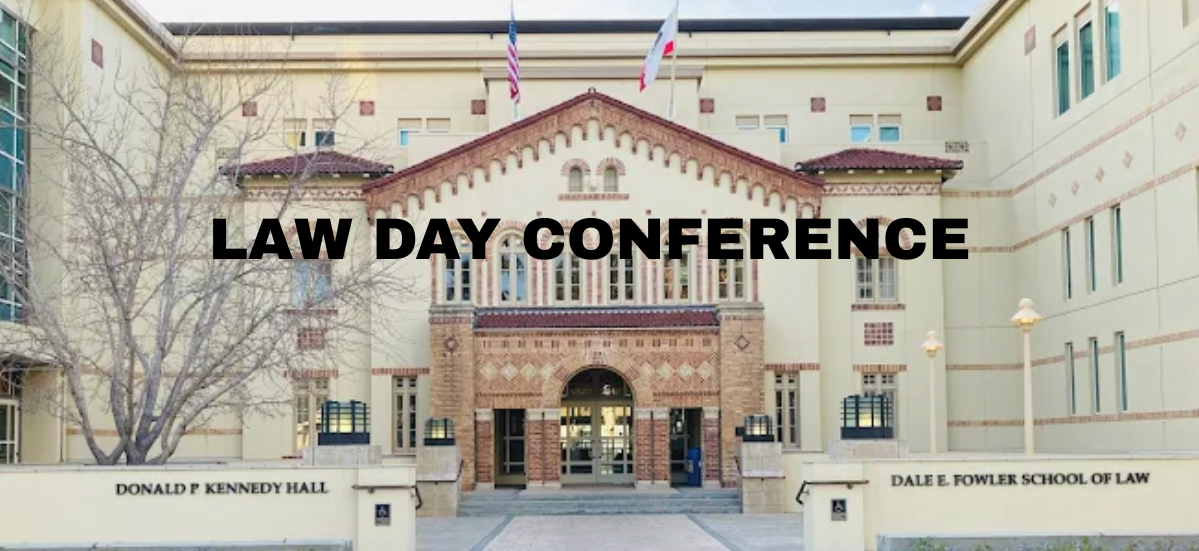










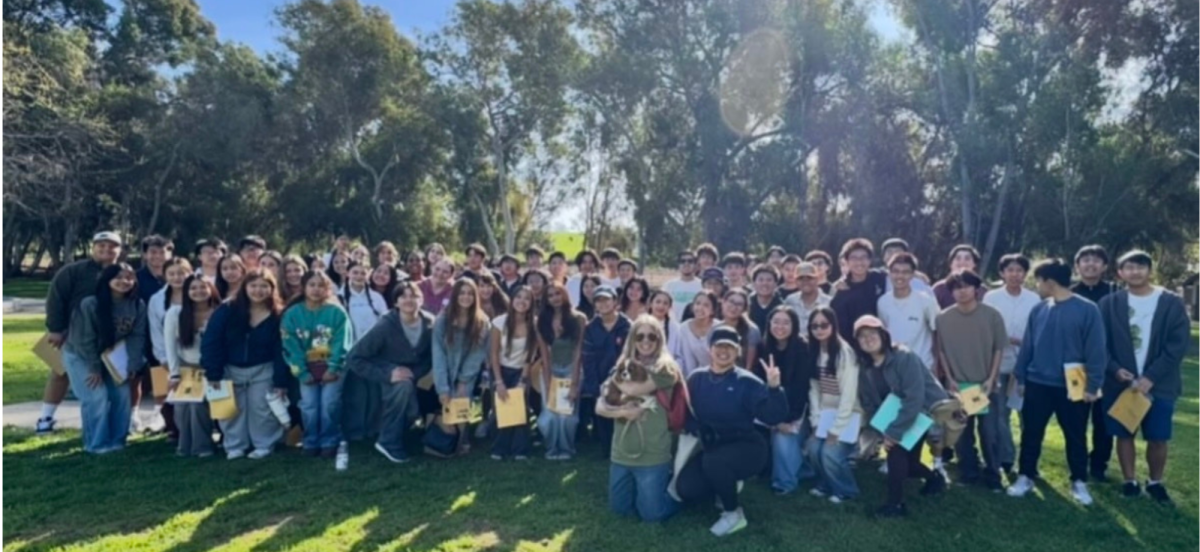





On February 28, Pacifica students attended a Law Day Conference at Chapman University, where the legal system was brought directly to the students. With the freedom to customize their experience based on interests, attendees selected two workshops out of five to develop their understanding of that topic. Whether they were exploring Fourth Amendment rights during the “Probable Paws” session, investigating career pathways into the legal profession, or navigating the complexities of renters’ rights and social media privacy, the day was about teaching students their rights and preparing them for the future. Students walked away from this experience with a clearer understanding of how the law shapes their lives and opportunities for them to shape the law in the future.
The Orange County Law Day Conference is an event that is annually hosted by the Constitutional Rights Foundation of Orange County (CRF-OC) held at the Chapman University Dale E. Fowler School of Law. This event brings together hundreds of aspiring high school students interested in pursuing a career in law with the county’s most experienced attorneys, professors, and legal experts. What makes this annual event so unique is that, rather than the traditional lecture-style panels, the event was set up so that students had opportunities to debate on the open floor, ask their most pressing questions, and apply the information they learned into their own lives as students transitioning into adulthood.
The primary goal of Law Day is to encourage students to be active observers of the law, learning skills such as being legally literate. Throughout the event, there were a total of five workshops that students could choose from based on their interests and needs:
- “Pathways into the Legal Field”: This workshop was filled with numerous speakers, all of whom had some background in the field of law. Some speakers were professors, students, or counselors at the Dale E. Fowler School of Law itself, while other panelists had roles as attorneys. Each of these speakers had something insightful to say about their journey and personal professional milestones within their field, but to make things even more interactive, students were welcomed to ask questions about their own potential career trajectories and the practicalities of law school.
- “Keyboard Courage: Are Employers and colleges allowed to discriminate against my social media posts?”: Led by a panel of legal experts, this workshop explored the intersection of digital privacy and professional background checks. Speakers shared insights into how digital footprints impact admissions and hiring, teaching students the legal boundaries of online expression. The session concluded with an interactive Q&A on protecting one’s professional reputation in an increasingly transparent digital world.
- Workshop 3: Probable Paws: Searches, Seizures, and the Fourth Amendment: This high-energy session brought the Constitution to life with a special appearance and live demonstration by K9 Canelo! Students then discussed and debated whether a “dog sniff” constitutes a search and explored how these investigations impact privacy and equity. It was a unique perspective at how modern police work must align with our personal right to privacy.
- Workshop 4: Human Trafficking: This session addressed the local reality of human trafficking, teaching students to identify warning signs and understand why young people are often targeted. Led by legal experts and advocacy leaders, the workshop focused on practical prevention strategies and the justice system’s role in supporting survivors. Participants walked away with the tools to transition from passive observers to informed advocates for their community’s safety.
- Workshop 5: Renters’ Rights: This workshop empowered students with the legal knowledge necessary to transition into independent adulthood and navigate the California rental market. Led by experts in data privacy and housing litigation, the session demystified lease agreements and clarified the legal obligations landlords must meet regarding safety and evictions. Through real-world examples, participants learned how to advocate for themselves and access resources to ensure their rights are protected before signing their first apartment contract.
For many Economics seniors, the trip was a chance to bridge the gap between classroom lecture and the civic duties they will soon inherit as they transition out of high school into adulthood. Senior Yvonne Tran attended to increase her civic engagement, noting that the experience made her feel more prepared for adulthood. “When I become 18, I can vote,” Tran explained, emphasizing the importance of being an informed citizen. She attended the workshops on Renters’ Rights and the Fourth Amendment, finding the former particularly relevant to her immediate future. “I think I’ll use the renting one… hopefully, I’ll be able to move out of my parents’ house,” she noted, highlighting how the practical knowledge of “renting responsibly” provides a roadmap for students transitioning to college and beyond.
The conference also served as a professional networking hub for Pacifica’s Mock Trial members. Junior Jocelyne Le attended not only as a club member but as an aspiring legal professional. Through the “Pathways into the Legal Field” workshop, she gained a realistic view of the industry that changed her perspective on her future specialty. “Originally, I wanted to become a criminal attorney,” Jocelyne shared, “but after what I’ve been told… I decided that I’ll go to my second option, which is a business attorney.” She credited her interaction with a tax and real estate attorney for this shift, noting that his in-depth explanation of the field “really pushed me into pursuing that career.” For students like Jocelyn, the day was about more than just learning about their rights, but it was also about building connections with mentors and clarifying their professional goals.
By the end of this conference, students discovered how the law is interwoven into everybody’s lives and the importance of having an understanding of their rights. By giving participants the agency to choose the workshops, the event successfully bridges the gap between learning about something in a class and seeing how it applies to the real-world. Students left with a variety of knowledge, whether that was a newfound interest in a certain legal career, a better understanding of digital footprint, or learned how to recognize the patterns and signs of human trafficking.