





















It is a couple of weeks into the second semester, and freshmen, sophomores, and juniors have already turned their attention to the 2026-2027 school year as class registration approaches. While the process for picking next year’s classes may be stressful, it’s also the best way for students to customize their high school experience, within the parameters of requirements. Whether you are a freshman looking to explore new electives, a sophomore bracing for the rigor of junior year, or a junior beginning to specialize, take advantage of this opportunity to design your future!
Navigating Registration
Before jumping straight into picking classes, it is important to understand how to balance your schedule to maximize rigor while avoiding a schedule so hard that burnout is inevitable. Pacifica offers a variety of electives, allowing students to choose the path that suits them best, whether they are focused on academics, the arts, or sports they have plenty of options to choose from. Even within these categories, there is enough variety that students can take their future into their own hands. If students want to challenge themselves with college-level coursework, they can take advantage of the wide range of AP classes offered at Pacifica. If students are interested in taking AP classes, they must think hard about that decision, considering that once they have signed up, no AP course drops are possible. Ryan Dalton, a current Junior, reflects on picking classes for his junior year: “Last year I sat down with my counselor, Mrs. Williams, and I didn’t want to take any AP classes and she said, ‘No, you have to take at least one because I know you can do it,’ so I ended up taking two AP classes: AP Psychology and AP US History. I feel like I have a pretty good mix of homework, extracurriculars, and time to spend with my friends and be more social. Compared to my previous years, this year has definitely been more intense. It’s been pretty enjoyable because I feel like I’ve had a lot of experiences that really changed my view on things, but it’s been fun.” AP classes are great ways for students to push themselves, with added benefits like college credit and an extended perspective on various subjects. Additionally, if students find that there is a class they want to take but isn’t offered at Pacifica, they can always talk to their counselor about taking online or community college classes.
It is also crucial that students learn how to navigate the technology available to them in regard to registration. One helpful tool is the Aeries portal, which enables students to view their transcripts online. Physical copies of transcripts are also available at the office. Through Aeries, students can also view which A-G requirements they have completed or need to complete. The A-G requirements are specific courses needed for UC and CSU admission and require getting a C or better in 15 core subjects, so students must keep that in mind while choosing classes.
Key Dates and Deadlines
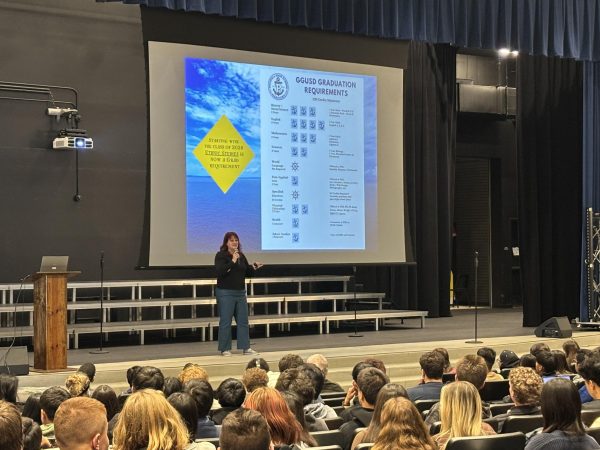
On January 20th, counselors hosted a presentation in the auditorium to present course offerings, and students received a course request form. These course request forms require signatures from students, teachers, and parents, and are returned to English teachers on February 2nd after they input their choices into AERIES during Home Room. Counselors will have one-on-one meetings with students from 2/9-3/4 to get their questions answered, discuss schedule changes and summer course offerings, and ultimately ensure that each student has the perfect schedule for them. If students have any unanswered questions or want more help, there are Transcript Audit Workshops on 1/20, 1/29, and 1/30. These workshops will be in the library computer lab during sixth period and after school. Come check them out!
Advice
Scheduling next year’s classes can definitely be stressful, but teachers and counselors are here to help you build your best year. Some advice given by Mr. Ocean includes taking challenging classes such as AP U.S.
History, AP Precalculus, and AP Calculus. Students are encouraged to push themselves to the best of their abilities, and a little bit more, Mr. Ocean explains, “If students are planning to go to a four-year college, I would always start with considering AP English Language. Every time you take an AP class, it gives you a weighted GPA and
colleges love it when students have those rigorous courses, and it does move the application a little forward. It’s one less class that you will have to take in college, which means it will be a little cheaper and go by a little bit quicker. I would highly recommend Algebra 2/Trigonometry which triggers that advanced math component, so if students were to do that, they could take precalculus over the summer and fall into AP Calculus during their senior year. Again, it’s all about the rigor, so taking AP Calculus would look a lot better than just Trigonometry/Statistics. It also depends on what students want to study. We talked about math, but they also had to take social science. Students can choose from AP U.S. History, or regular U.S. History, just depending on what the student is looking for, but Ms. Lawler does an amazing job with AP U.S. History and a lot of kids love that class. Lastly, I’m going to recommend a 3rd year of science. STEM or not, colleges love seeing 3 years of science, at least one year of life science, and one year of physical science.” While choosing a schedule that caters to students’ specific needs may seem stressful, it is important to remember that there are people cheering for students’ success and willing to help.
Q&A With Mrs. Stultz:
Q: What classes do you recommend for students looking to challenge themselves?
A: Regardless of grade level, students should be realistic with their time commitments and gauge their interest in a subject area before signing up for a challenge. I highly suggest challenging yourself in a subject area that you enjoy –there is no need to take an AP science class if you’re going to struggle and harm your GPA. Maybe you’re more of a humanities brain, so challenge yourself by taking AP English or History instead.
Q: What are some fun newer programs students can sign up for?
A: AP Seminar is the new English 2 Honors. It’s a great way to introduce yourself to AP English. AP Language/Composition is non-fiction heavy during junior year whereas AP Literature/Composition is fiction heavy during senior year. AP Seminar will introduce students to research skills and give you the work habits and familiarize you with the expectations of an AP class before embarking on this series of courses!
Q: AP Lang is very work intensive, what would you say to encourage students to take this class despite the challenge?
A: We value effort. We’re open access and welcome students from any track (English 2P or AP Seminar) so long as they’re willing to hone in on their time management skills. This class will prepare students for college as the majority of post-secondary writing will be non-fiction (argument, synthesis, research, analysis). There are waves of work; our classes always maintain their A’s and B’s with a good mindset!
Q: What advice do you have for students choosing their schedules?
A: I’ll say it again: protect your GPA. Speaking from experience, I took AP Physics my senior year at Fountain Valley HS because I thought I “needed to” or felt pressure from friends who were signing up. I struggled all semester to get a C. I switched to Physics second semester and earned an A. I was going to college as an English major! I should have saved myself from that grief. Focus only on yourself. Are you a humanities brain or STEM minded person? What is your intended major in college? They’ll look at the rigor of your applied major, so this means if you’re going to attempt majoring in Biology, then your science classes should be where you put most of your effort. A B in an Advanced Placement class carries the same weight for GPAs as an A in a college prep class. This is not to say you shouldn’t challenge yourself, but I’d suggest being realistic. Don’t listen to your peers –too many cooks in the kitchen! It’s ultimately YOUR schedule.
Final Thoughts
Ultimately, registration serves as a blueprint for next year’s growth, challenges, and discoveries. Taking the time to thoughtfully choose classes makes all the difference, so that next fall, you’ll be walking into classes that truly excite you. Don’t hesitate to reach out to counselors, chat with current teachers, and reflect on personal goals before confirming exact classes. Your future self will thank you!